Smalls and Sporting
Smalls and Sporting
Hatpins, jewelry, bottles, textiles and fly fishing tackle: the small objects and country sporting gear collectors look for.
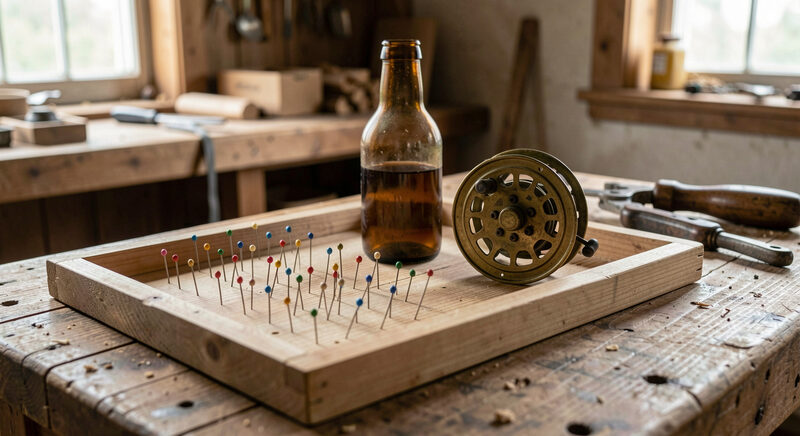
What counts as a small
In the trade, smalls are the objects that are not furniture, not clocks and not lighting. The word covers jewelry, hatpins, bottles, boxes, textiles, toys, sewing tools, small metalware and a long tail of odds and ends. The family is defined by size and by handling rather than by material, which is why a single dealer case can hold silver, glass, tin, cloth and paper all at once.
Smalls are the ideal entry into collecting because they ask for little money and little space, and because they teach the reading skills that carry across the whole field. A collector who can date a bottle by its lip, read the marks on a brooch and judge the weave of an old textile has learned to look closely, and that habit is the foundation of every other kind of collecting.
Jewelry and hatpins
Jewelry divides by material and by period. Old gold and silver carry marks, often small and often worn, which name the metal and sometimes the maker and the year. Costume jewelry has no such marks, and is dated by its style, its stones and its construction. The collector should learn to read a mark with a loupe and to recognise the difference between solid gold and gold filled or plated work, since the difference in value is large.
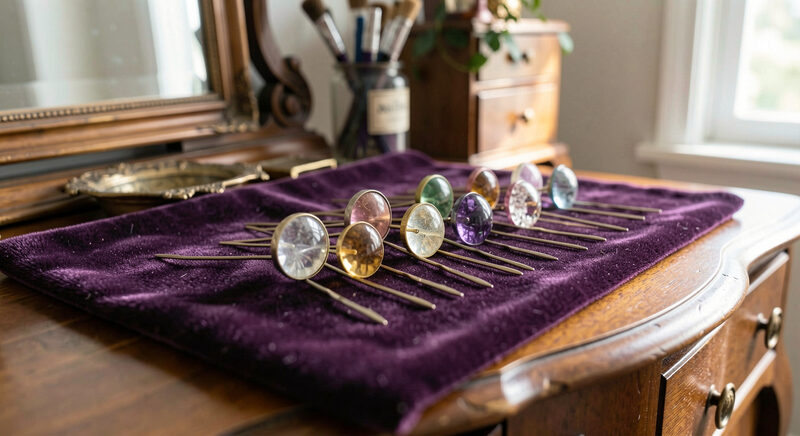
Hatpins are a family of their own within jewelry, and a generous one. They were made in enormous numbers in the late nineteenth and early twentieth centuries, in lengths from a few inches to more than a foot, with heads of glass, metal, jet, porcelain and stone. The page on collecting Victorian hatpins sets out the lengths, the materials and the holders that display them, and it is the page to read before buying a hatpin whose head you cannot name.
Bottles and glass smalls
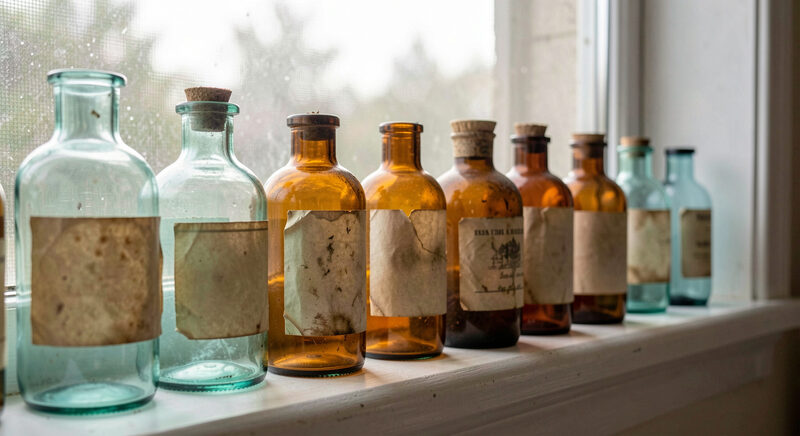
Bottles are among the most collected of all smalls, because they were made in vast numbers and because they survive well. A bottle can be read by its colour, its shape, its lip and its embossing, and each of those carries a date. Early bottles were hand blown, with a lip applied by hand and a body that is slightly uneven. Later bottles were made in moulds, with a regular shape and a machine made lip. The page on antique medicine bottles takes the reading of one important family step by step, and the same method applies to bottles of every kind.
Other glass smalls, from salt dishes and sugar shakers to cruets and condiment sets, share the glass that filled the table and are collected alongside the tableware in the china, glass and porcelain section of this magazine. The two fields meet often, and a collector who follows both will recognise the same patterns in different shapes.
Textiles, toys and small metalware
Textiles are the most fragile of the smalls and the most rewarding when they survive. Tablecloths, quilts, samplers, scarves and dresser cloths carry the work of the hands that made them, and their condition is everything. Light, damp, insects and rough handling all destroy cloth, so a collector should store textiles flat, away from light, in acid free paper, and should handle them with clean hands and no jewelry.
Toys and small metalware are the playful end of the field. Sleds, skis and snowshoes bring the winter into a collection, while cast iron figures, die cast vehicles and small tools bring the workshop. The reading method is the same as everywhere else: material, construction, wear and marks. A cast iron toy with the original paint and honest wear is a good object. One that has been repainted and given artificial wear is a decoration rather than a collectible.
Country sporting gear
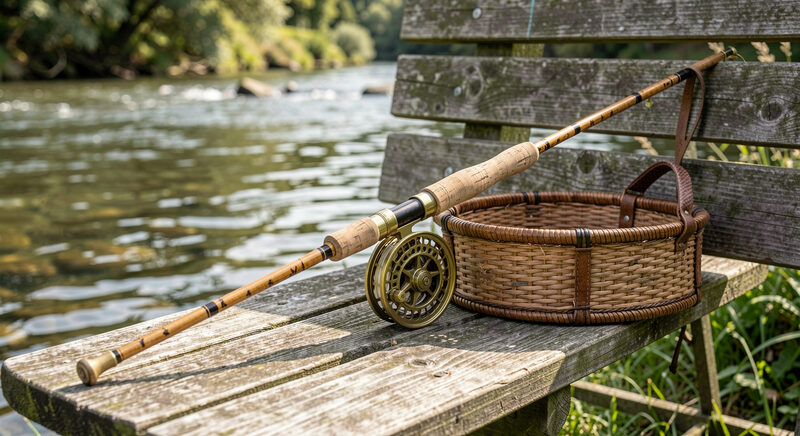
The country sporting gear of the north-east, especially the equipment of fly fishing, is a field with its own collectors and its own standards. A split cane fly rod, a brass reel and a woven creel are the classic objects, and each has its own points to check. The page on antique fly fishing tackle explains what makes a rod collectible, how to check the ferrules and guides, and how to store tackle so that it does not set and lose its life.
Sporting gear is collected for use as well as for display, which sets it apart from much of the field. A rod that can still be fished, a reel that still turns and a creel that still holds are objects with a second life, and their collectors often value that life as much as their age.
Care and storage
Smalls need less space than furniture but more attention, because their small size hides their fragility. Keep jewelry away from damp, which corrodes metal and clouds stones. Keep bottles out of direct sun, which can fade labels and turn some glass purple. Keep textiles flat and dark. Keep metal dry and free of contact with other metals. Label every object with what is known about it, and photograph it with its marks, so that the record survives the object.
The smalls and sporting guide sits alongside the rest of this magazine, and its three pages on hatpins, bottles and fly fishing tackle take the reading of each family further. A collector who starts with a handful of smalls and learns to read them will find the whole field opening from there.
The Vermont Antiques Dealers Association is a regional reference point for the trade: vermontada.com.
Smalls and Sporting
Antique Fly Fishing Tackle
Collect bamboo fly rods, reels and creels: what makes a rod collectible, how to check ferrules and guides, and how to store them.
Cane, ferrules and guides, checked before the first cast.
Smalls and Sporting
Collecting Victorian Hatpins
How to collect Victorian and Edwardian hatpins: lengths, materials, heads, marks and the holders that display them.
Lengths, materials, heads and the holders that display them.
Smalls and Sporting
Antique Medicine Bottles
Read antique medicine and pharmacy bottles by colour, lip and embossing, and learn what old labels and contents can tell you.
Colour, lip and embossing: the base dates the bottle.